I verify digital material by locating it in space and time, tracing its provenance, and separating what the evidence establishes from what it merely suggests. Two case studies below, written to the standard I hold: every claim carries a source and a confidence level, and the open questions stay open.
Berkeley Protocol principles — do no harm, preserve the record, corroborate, document the method
Method, and how to read this
Every finding below carries a confidence label, and every case ends with what is not established. The labels and the method belong together: the label is only as good as the check behind it.
How to read the findings
Established
Supported by two or more independent lines of evidence, or by a primary document. The location and date in Case 01 are established.
Supported
Consistent with the evidence and the best explanation available, but resting on a single line. Stated as such.
Open
Named as unresolved. I do not fill these in with plausible detail.
Not AI
A judgement about whether footage is synthetic. Where a tool's confidence was low, I say so rather than relying on it.
What I did
Locate, then date Identify fixed features — a church facade, a parking lot, building lines — and match them to satellite and street-level imagery. Then establish when, using contemporaneous reporting, timestamps and other footage of the same event.
Trace provenance Find the earliest instance of a clip rather than the most popular one; compare timestamps across platforms; look for the version without an added caption, which is usually closest to the source.
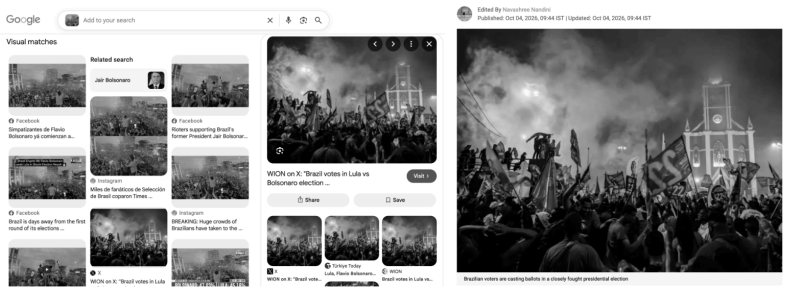
Test the tools against the task I log where automated tools failed as well as where they helped. In Case 01 an AI overview misidentified the location and cited sources published after the video had already circulated, and an AI-detection tool's 57% confidence was too weak to rely on.
Go to the people Attribution usually needs a human. I message and email the people who filmed, posted, or witnessed — and I log what each one said, and what remains unanswered.
State the limits Every case below ends with what is not established. A gap named is worth more than a gap concealed.
Case 01
Bolsonaro Advancement Video: Fake, Real, or Decontextualized?
Tracing a viral video's context, provenance and potential authorship
Bangu, Rio de Janeiro, Brazil · 3–4 October 2026 · Geolocation & chronolocation
Open — videographer and original upload unidentified
A video of Bolsonaro before a large crowd spread on X on election day with no caption, credit or provenance. My investigation indicates the event was real but the timing was not: the rally took place the night before, and the undated footage invited viewers to read a campaign celebration as live election-night activity.
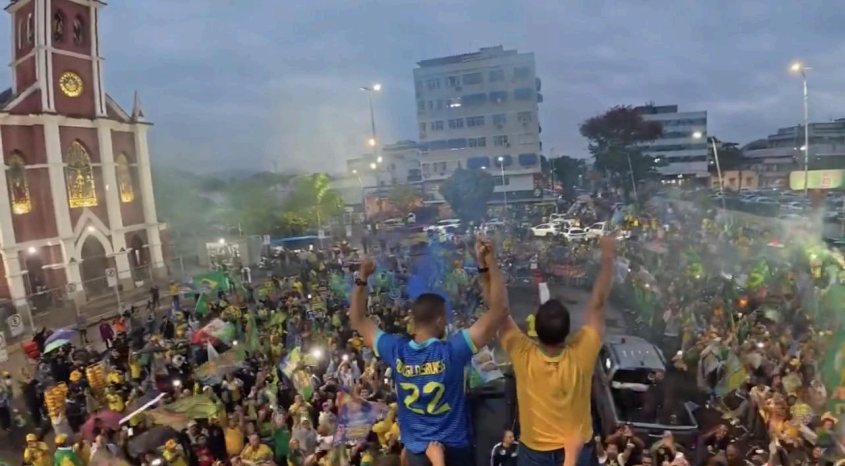
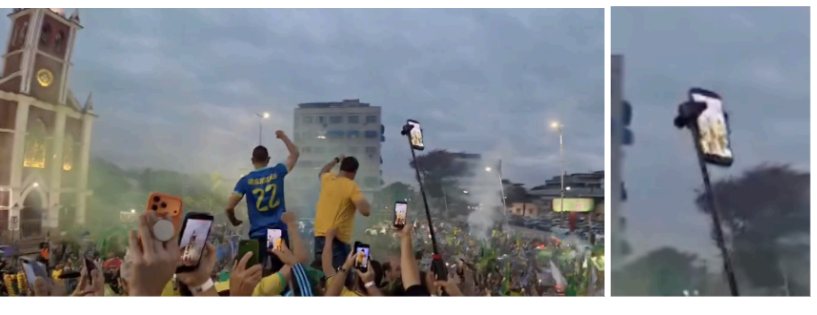
Fig. 1 The video as it circulated on election day. A crowd, flares, a church on the left and a parking lot on the right — the two fixed features that made the location findable.Frame from the video under investigation.Shows the material as viewers saw it: no caption, no credit, no dateDoes not prove when it was filmed — nothing in the frame carries a date, which is the whole problemFig. 2 Two things tested against each other. Left, the automated AI-detector's verdict on the footage. Right, the post that carried it, with other recordings of the same event gathered beside it. The detector's confidence was too low to be useful; the other footage was what actually helped.Screenshots captured for analysis, from the tool output and the public post.Shows why the automated check could not carry the finding, and where corroboration actually came fromDoes not prove that the footage is authentic or synthetic on its own — a 57% confidence score settles nothing either way
The question
Is the footage authentic?
Was it filmed on election day, as the posting implied, or earlier and decontextualised?
Why does it matter whether it was fake versus real-but-misleading?
Established
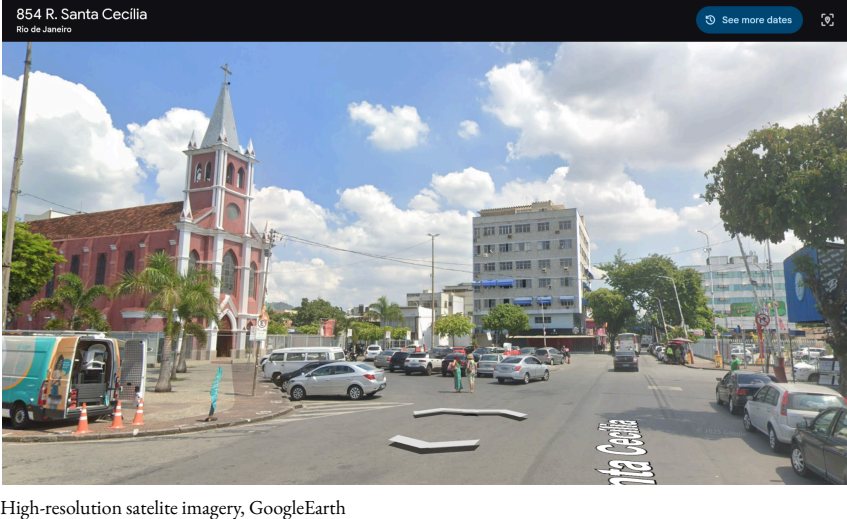
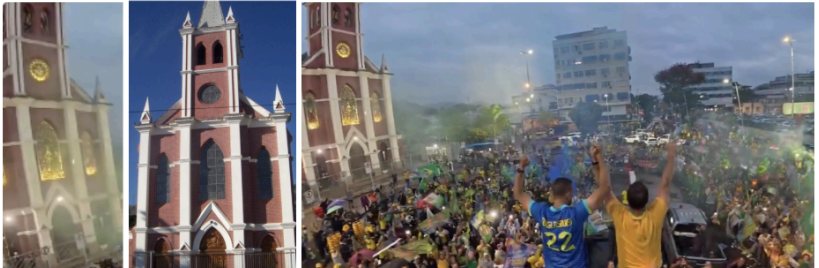
Location, with high confidence: the rally was at Praça da Fé in Bangu, Rio de Janeiro. The church in the footage is Paróquia São Sebastião e Santa Cecília, at Largo de Bangu; the surrounding buildings and the parking lot are consistent with satellite and street-level imagery.
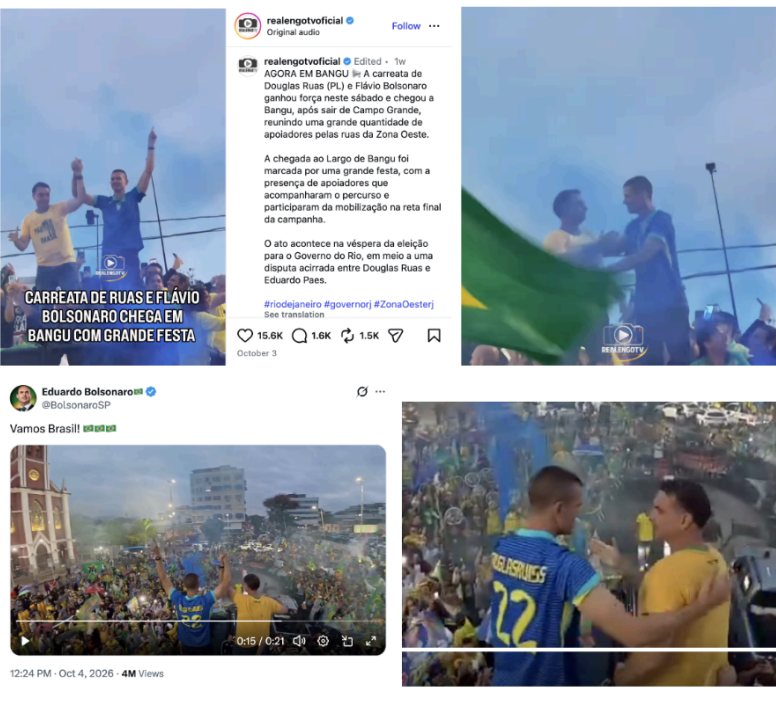
Date, with high confidence: 3 October 2026, the night before the video circulated. A separate video of part of the same celebration was posted on 3 October, before the election, and Metrópoles reported that the church closed its doors because of noise from a Bolsonaro rally outside that night.
The footage is very likely authentic rather than synthetic — a judgement resting on geolocation and multiple independent videos of the same event, not on an AI-detection tool.
The video was first shared on 4 October at 12:24 PM ET and spread without attribution; reposts implied the event was live, one of them claiming people were gathering with 90 minutes remaining.
Fig. 3 The church identified as Paróquia São Sebastião e Santa Cecília at Largo de Bangu, matched against the building in the video and against street-level and satellite imagery.Google Earth imagery.Shows the fixed feature that anchors the video to Bangu, Rio de JaneiroDoes not prove the date — location and time are separate findings, and this establishes only the firstFig. 4 The same facade across three conditions — daylight, dusk, and the crowd scene from the footage. Matching an architectural feature across different lighting is what separates a geolocation from a resemblance.Frames from publicly posted footage of the event, with the church photographed in daylight.Shows that the church in the viral footage is the same building seen in other recordings and in the daytime viewDoes not prove anything about the date on its own — matching a building tells me where, not when
Not established
The videographer and the original uploader remain unconfirmed.
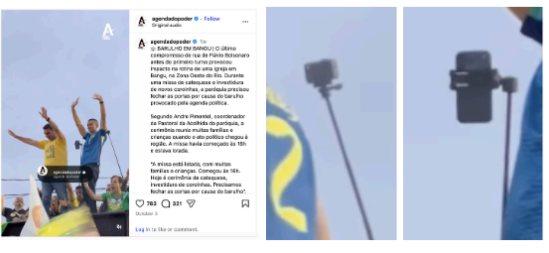
A GoPro is visible in a matching sequence in other footage of the event, which suggests it may have recorded the viral video — but the operator, the camera-to-source link and confirmation remain outstanding.
The logged QuickTime timestamp (16:24 on 4 October) does not match the post time (12:24 PM), while the original capture timestamp was zeroed out — consistent with the file being processed around posting, but not conclusive.
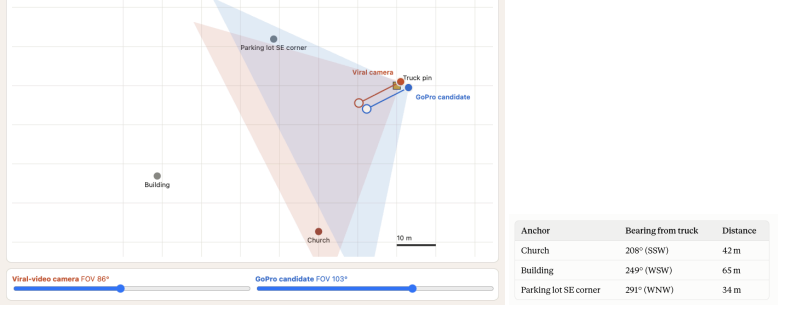
Camera position and lens field of view are estimates, not measurements.
What I did
Located the event from fixed visual features — a maroon church to the left, a parking lot to the right — then confirmed the church's identity and matched buildings and lot layout to Google Earth satellite and street-level imagery.
Established the date by finding a video of part of the same celebration posted on 3 October, and by locating contemporaneous reporting that placed a Bolsonaro rally outside the church that night.
Compared share timestamps across platforms to find the earliest instance and to document reposts that implied live coverage.
Ran reverse video search (InVid) and reverse image search; InVid returned nothing on YouTube and no C2PA provenance data was available, while image search surfaced additional angles and further footage of the same event on Facebook.
Read QuickTime metadata: the original capture time was zeroed, and the logged timestamp placed file processing near the time of posting.
Tested automated tools and recorded their failure: an AI video detector returned 'not AI-generated' at 57% confidence, too weak to be useful, and a Google AI overview misidentified both the church and the rally while citing sources published a week after the video circulated.
Searched in Portuguese ('Bolsonaro Bangu 3 de outubro'), which surfaced much more footage of the event.
Applied camera-to-source attribution: camera match, operator identification, source attribution. Observed two cameras — a GoPro and an iPhone — on poles near Bolsonaro; the viral video shows that same iPhone and pole, and since a camera cannot appear in its own footage, this plausibly rules out the iPhone and points toward the GoPro, without excluding devices out of frame.
Messaged the Metrópoles videographer credited with footage of the event — the first eyewitness logged — and contacted three people who live near Bangu, as well as telephoning the church.
Fig. 5 Bearing and distance from the camera position to the three anchors in frame — the church at 209°, a building at 248°, the parking lot corner at 291° — with a field-of-view wedge testing whether one position could produce the framing in the viral video.Diagram produced from my own Google Earth pin placements; distances are estimates, not measurements.Shows a camera position consistent with the framing of the viral footageDoes not prove which camera took it — position and authorship are different problemsFig. 6 The gesture sequence, and the camera behind it. In the wide recording, Bolsonaro lowers his arms before the man in blue and then extends his hand before the embrace. The same sequence appears in the second recording, where a device on a pole is also visible above the crowd. Matching gestures across two recordings is what constrains when each frame was taken.Frames from publicly posted recordings of the rally.Shows a gesture sequence that appears in both recordings, and a camera position consistent with the framing of the viral footageDoes not prove which device produced the viral clip — matching gestures constrain the timing, they do not identify the operatorFig. 7 Two cameras on poles above the crowd — one carrying a GoPro, one an iPhone — alongside the footage that revealed them. The viral video shows the same iPhone and pole behind Bolsonaro, and since a camera cannot appear in its own footage, that plausibly rules the iPhone out.Frames from publicly posted footage of the event.Shows that at least two pole-mounted cameras were recording this crowd, and that one of them can be excluded as the sourceDoes not prove that the GoPro recorded the viral video — a device out of frame is not excludedFig. 8 Additional recordings of the same rally, gathered to test the gesture sequence against an independent source rather than against itself — including the embrace, from a different angle.Screenshots of public posts and footage of the event.Shows that other, independently posted recordings of this rally exist, and that the sequence holds across themDoes not prove the videographer's identity. Corroboration narrows the field; it does not close it
Why it matters
A fabrication is disinformation. A real video stripped of its date misleads differently, and this one was shared on election day with no caption, inviting viewers to assume it was live. It is a cheapfake in its purest form, and it shows why chronology is as important as authenticity: proving footage is real is only half the question.
Decontextualisation
Cheapfake
Geolocation
Chronolocation
Camera-to-source attribution
C2PA
Case 02
One Shark, Two Viral Videos
Uncovering one as real, one as fake, and the relationship between them
Atlantic City, New Jersey · September 2026 · Provenance & source tracing
Open — awaiting witness responses
Two videos appeared to show the same shark in a flooded New Jersey street. One was credited and carried by CBS News and News 12; the other was circulating unattributed with over a million views. The interesting part is that neither was a fabrication in the way the internet assumed.
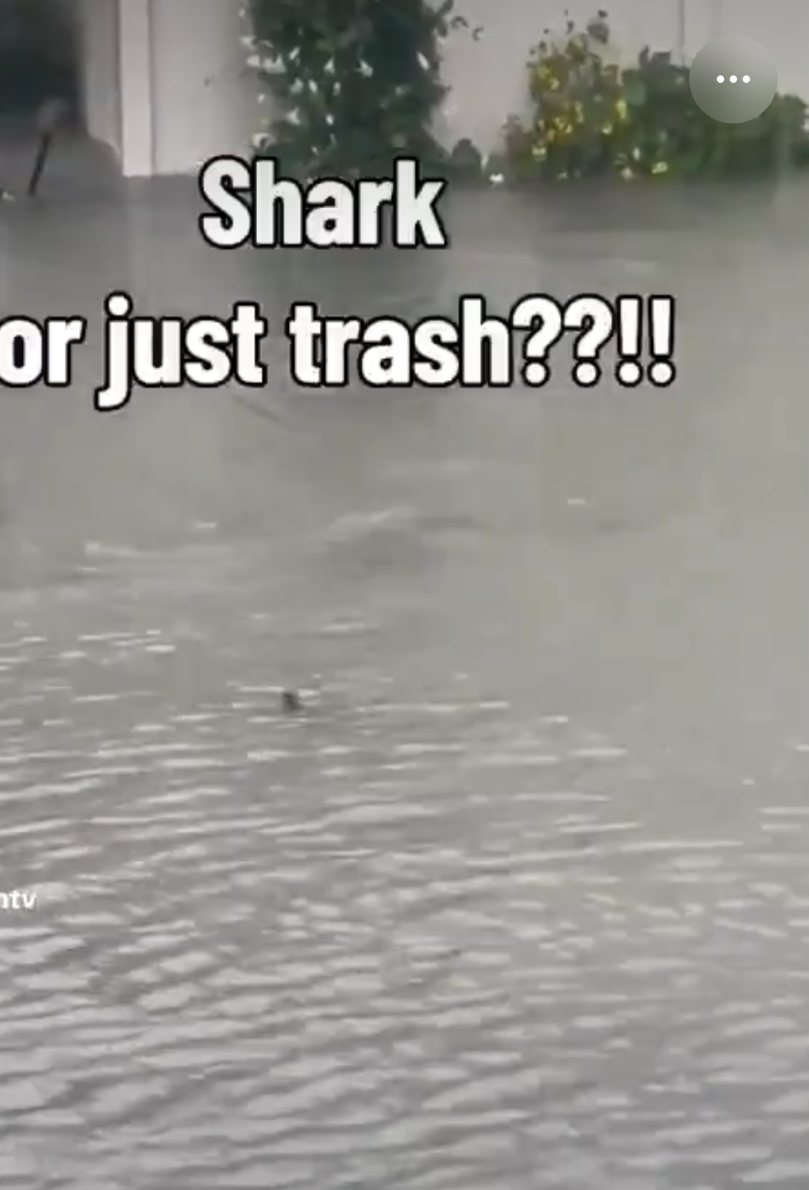
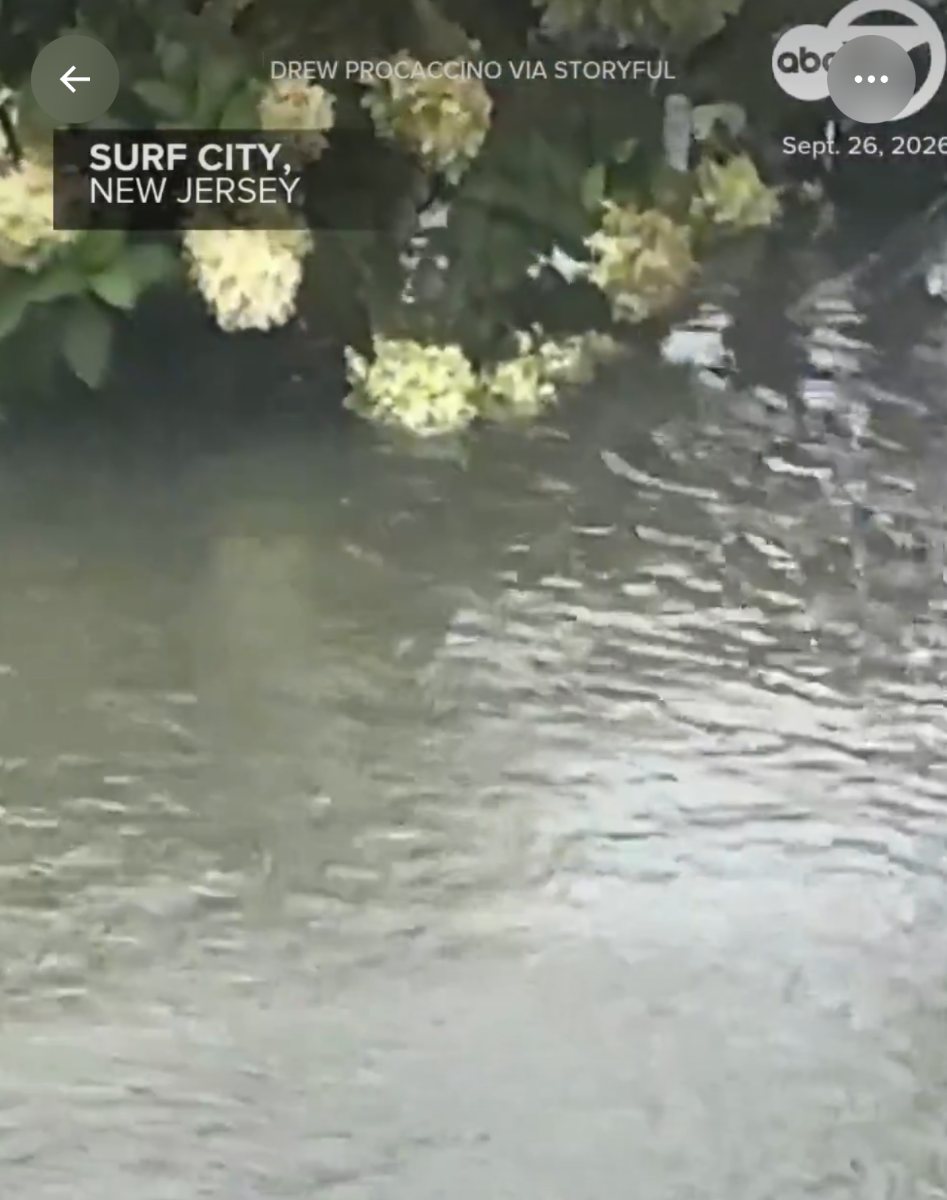
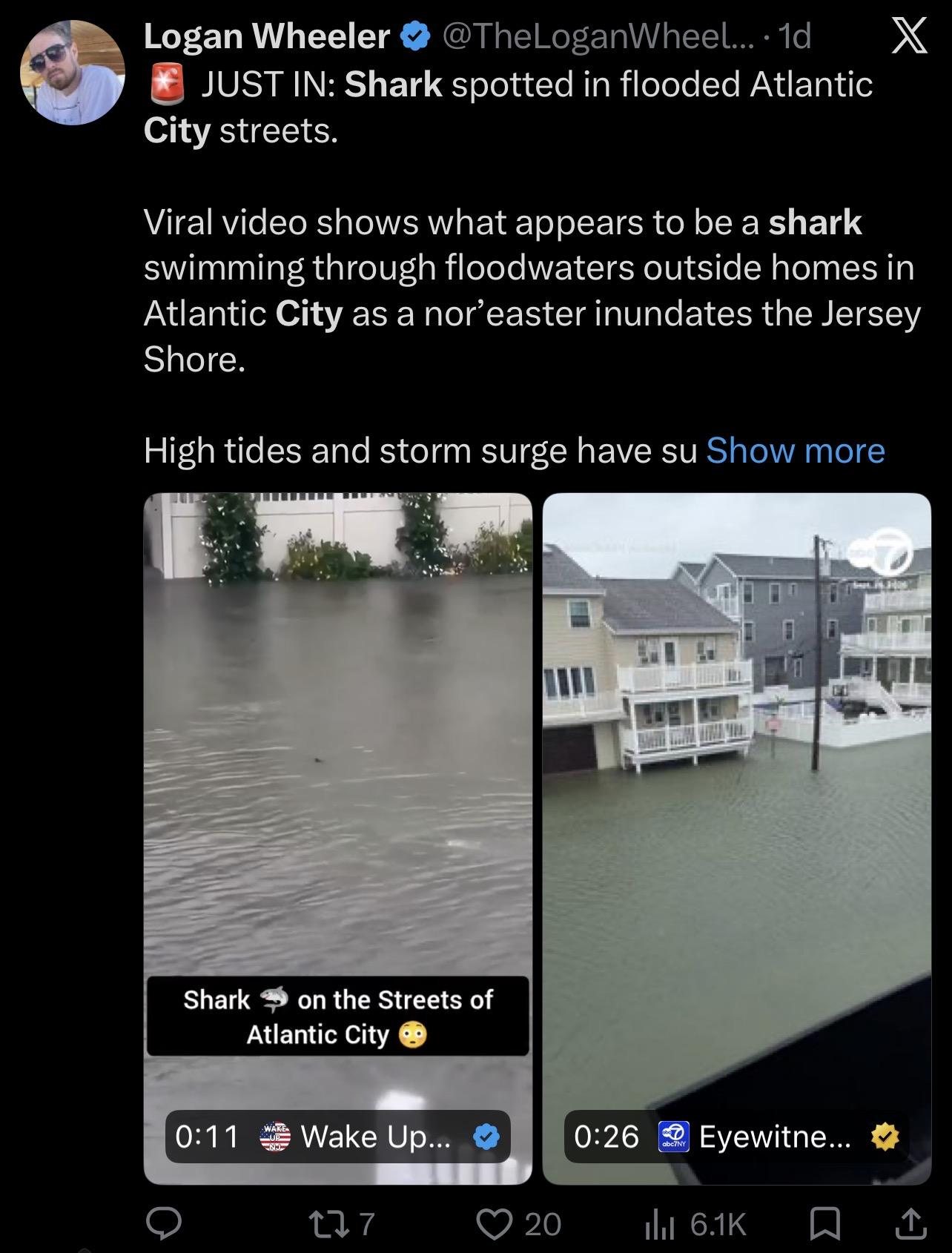
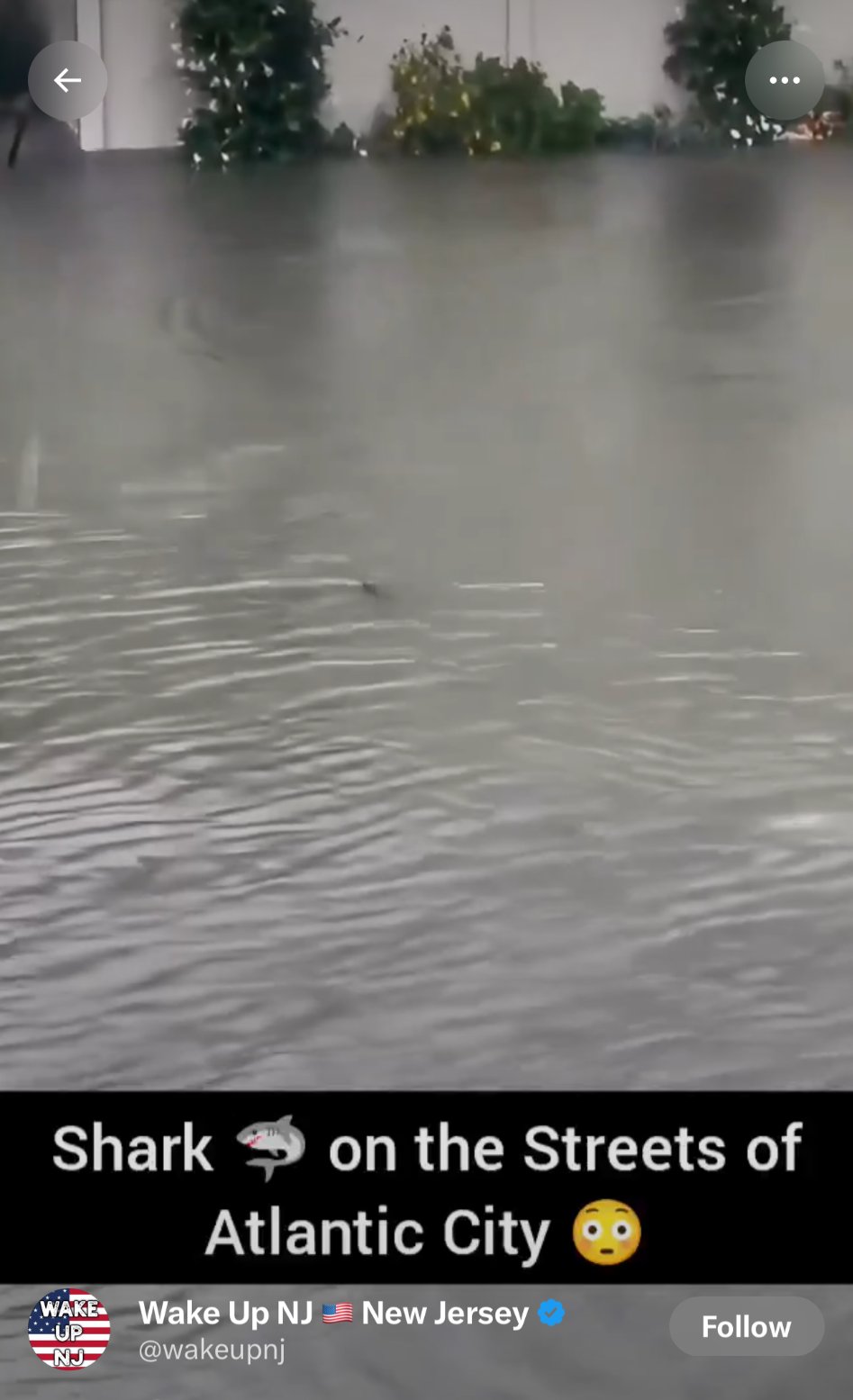
Fig. 9 The uncredited clip as it circulated, with the poster's own text overlay. The object in the water is what the disagreement was about.Screenshot of a TikTok post, captured for analysis. The left edge is cropped to remove the account holder's handle.Shows the footage that reached 1.2 million views with no byline, credit or attribution to any videographerDoes not prove that the object is a shark — the poster later said it was floating debrisFig. 10 The credited version, carrying an on-screen credit to Drew Procaccino via Storyful, a location line reading Surf City, New Jersey, and the date 26 September 2026. The location differs from the Atlantic City framing the clip circulated under.Screenshot of an ABC7 Eyewitness News post.Shows an attributable source for this footage, and a date consistent with the uncredited poster's account of when it was filmedDoes not prove that the two clips were shot at the same place or time — the differing location line is exactly why that still needs checkingFig. 11 One of the accounts that carried the footage onward, pairing it with a second still and a headline. The post reproduces the clip without crediting a videographer.Screenshot of a public post, captured for analysis.Shows how the clip travelled as an aggregator item, with the shark framing already attached and no attribution carried acrossDoes not prove that the footage in the second still is the same recording as the first — the post presents them together without saying so
The question
Was the widely shared video of a shark in a flooded Atlantic City street authentic?
Were the two prominent videos of the same event, and did they show the same thing?
Established
Two distinct videos were in circulation. One was credited to Drew Procaccino and distributed through Storyful, then carried by CBS News, News 12 and other outlets — providing an attributable source for that footage.
The uncredited version, which reached 1.2 million views via a repost from a local tabloid account and then 2 million, carried no byline, credit or attribution to any videographer.
The version with no in-frame caption — on TikTok — was the closest to an original, and its poster said the footage was shot by his sister on 26 September.
That poster confirmed the footage itself is real, and that the object was floating debris rather than a shark. The video was authentic; the shark was a recaption.
Many of the photographs, memes and images circulating in the comments of these posts were clearly AI-generated.
Visual comparison showed similar white paneling and hydrangeas in both videos — suggesting a common setting, though not confirming the same location and time.
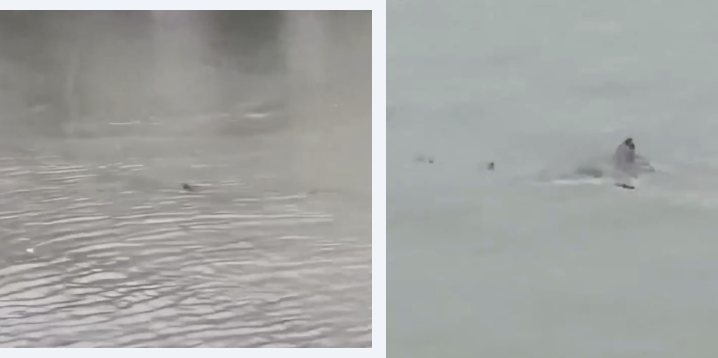
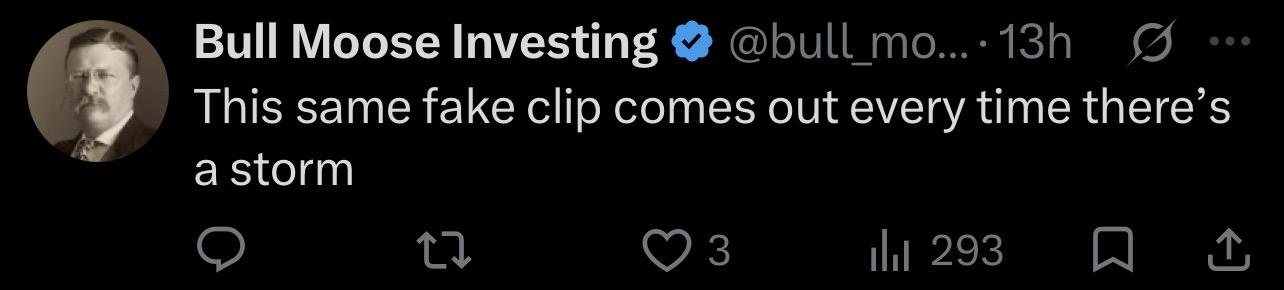
Fig. 12 The object in the water, cropped twice at different moments. This is the whole of the disagreement: whether it is a shark or debris.Crops from the uncredited clip, enlarged.Shows why the clip is genuinely ambiguous at face value — the object is small, partly submerged and low-contrastDoes not prove either reading. At this resolution the frames cannot settle it, which is why the answer had to come from the person who filmed itFig. 13 A reply dismissing the footage as a recurring fake. This kind of pre-emptive skepticism is what the liar's dividend exploits.Screenshot of a public post on X.Shows that part of the audience treated authentic footage as fabricated before checkingDoes not prove anything about the clip's authenticity — a reaction is evidence of the reaction, not of provenanceFig. 14 A repost carrying the shark framing as a headline statement, with two video stills beneath it. The caption is asserted, not hedged.Screenshot of a public post by a verified regional account.Shows the recaption in the wild — a claim of what the footage shows, made by a third party who did not film itDoes not prove that the account had any verification for the caption, or that the stills show the same recording
Not established
The source of the uncredited video's original upload remains unidentified.
A location discrepancy I have not resolved: the news version of the footage carries an on-screen location line reading Surf City, New Jersey, while the clip circulated under an Atlantic City framing. Surf City is roughly 40 miles up the coast. Whether these are the same event, two separate flood events, or one mislabelled location is the single most important thing left to check.
That the two videos were shot at the same location and time is suggested by shared visual features but was not confirmed.
A commenter's claim of a second shark in West Wildwood, roughly 40 miles away, with an image that appeared fake, is unverified.
Whether the original videographers believed it was a shark, or intended to mislead, is unknowable from the available evidence.
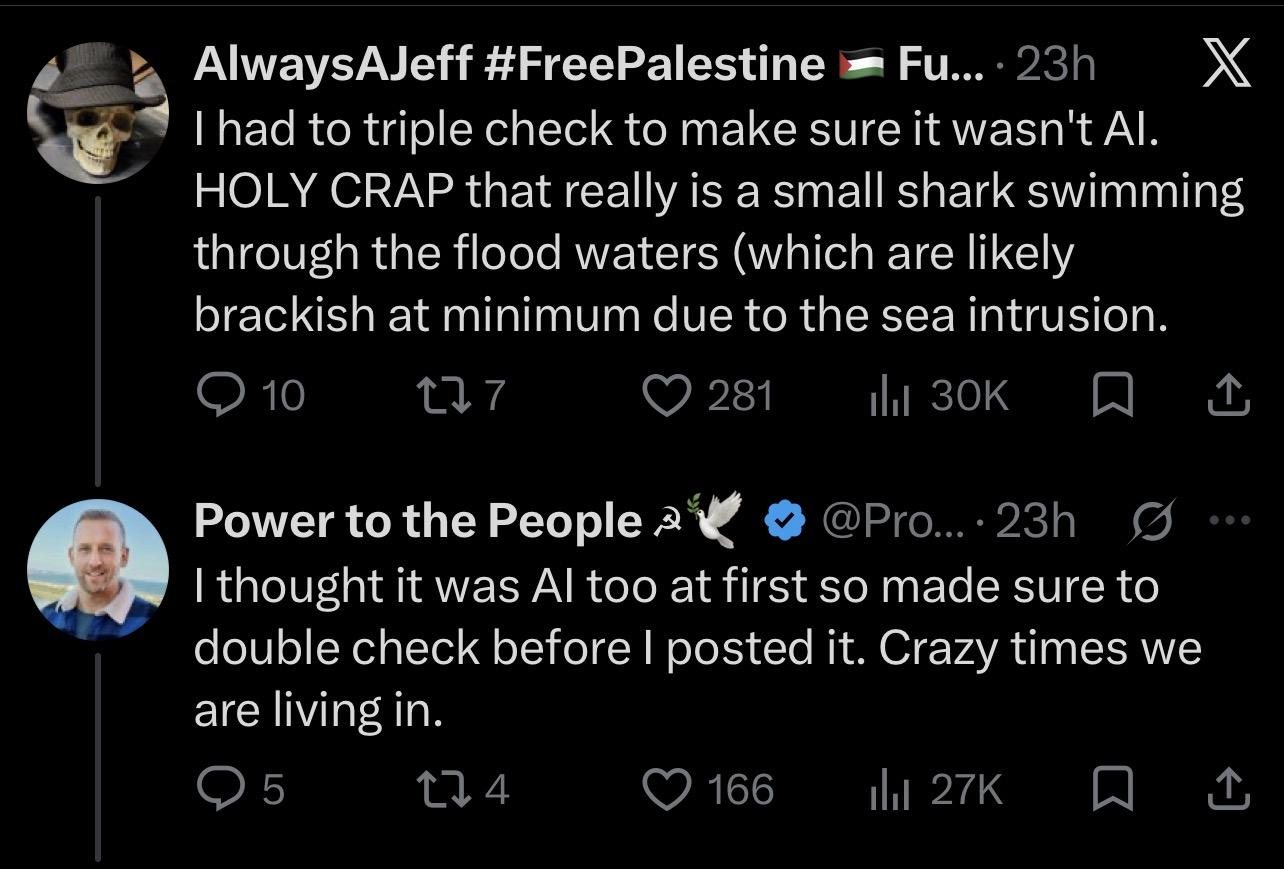
Fig. 15 Two posters describing their own uncertainty about whether the footage was synthetic. Both looked closely and still could not settle it from the video alone.Screenshot of a public thread on X.Shows how thoroughly AI suspicion now sits inside ordinary reactions to real footageDoes not prove whether the footage is synthetic — that judgement came from geolocation and corroboration, not from anyone's impressions
What I did
Traced the clip outward from X to TikTok, Instagram and news sites, comparing view counts and timestamps to find the earliest instance.
Compared the two videos frame by frame for shared visual features — paneling, hydrangeas — as candidate geolocation markers.
Reverse image search (Yandex) on a low-detail frame; it returned little, though it surfaced a recurring 'Hurricane Sandy shark' comparison worth noting.
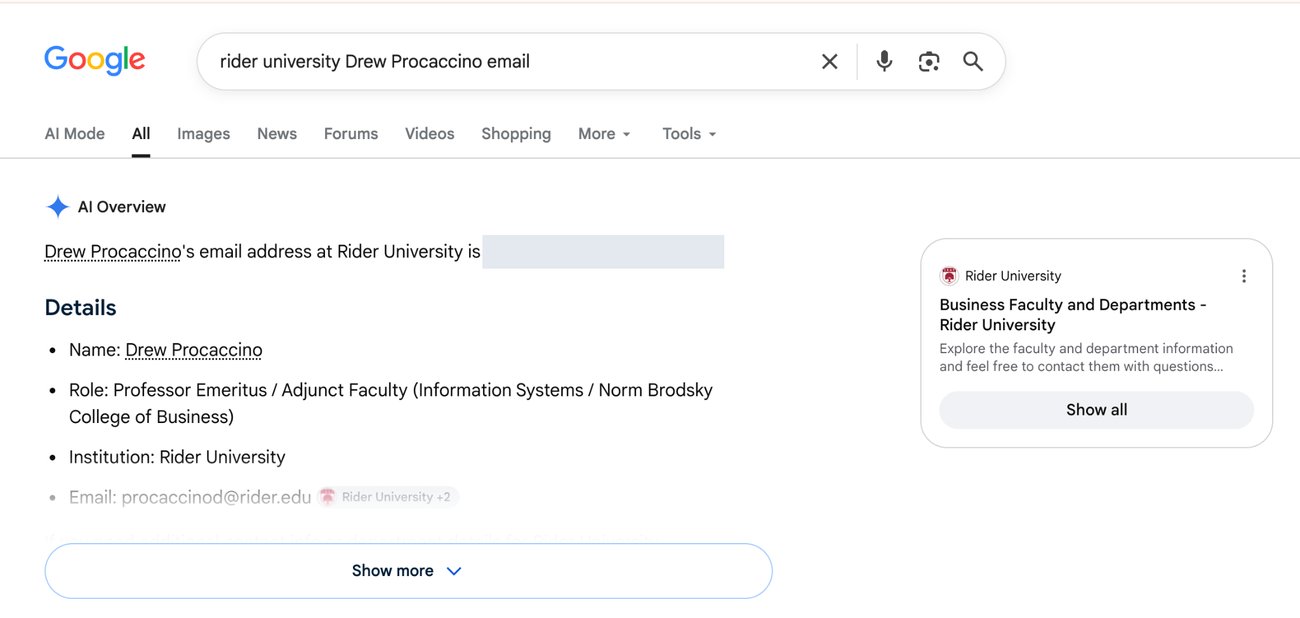
Identified the credited videographer, established his institutional affiliation, and emailed him directly about the video's circulation and public response.
Messaged the TikTok poster and the commenter claiming a second sighting; obtained a direct statement from the poster and logged it verbatim.
Fig. 16 The step that produced a person to contact: searching the name attached to the credited footage and establishing an institutional affiliation, which gave a route to reaching him directly.Screenshot of a web search, captured for analysis. An email address in the result has been redacted.Shows how an attributed clip becomes a contactable human being — the move that turned an anonymous video into an interviewDoes not prove that the person named took the footage — the credit was the starting point for asking, not the answer
Why it matters
A real video can still mislead about what happened. This was a recaption — a cheapfake — and it shows how real footage, once stripped of its caption, gets re-narrated by each share. It also demonstrates the liar's dividend in reverse: commenters insisting they had 'seen this circulating every time there is a flood' were dismissed, when the footage had in fact been recontextualised.
Cheapfake
Recaption
Liar's dividend
Confirmation bias
Provenance
What I will not do
No AI-generated or AI-"enhanced" imagery, ever — in an investigation, a synthesised pixel is a fabricated fact.
No claim without a source, and no inference presented as an observation.
No single-source finding published as fact, and no gap filled with something plausible.
No identifying a private individual's handle or image unless the public interest in the identification clearly outweighs the risk to them.